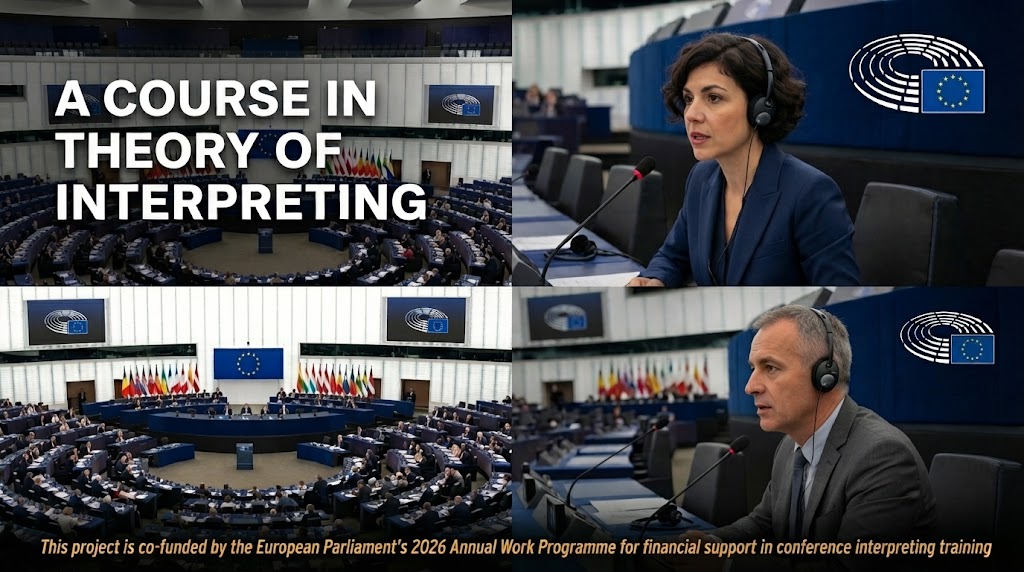
This course provides a comprehensive, practice-oriented exploration of the theoretical foundations, cognitive models, and socio-pragmatic dimensions of English-Ukrainian and Ukrainian–English interpreting. Beginning with the evolution of translation paradigms, from structural equivalence to functional Skopos theory, the syllabus transitions to interpreting-specific frameworks, focusing on cognitive process models such as Seleskovitch's interpretive theory and Gile's Effort Models to analyze live performance constraints like memory load, décalage, and time pressure. The course concludes by addressing professional ethics, quality assessment, high-stakes crisis interpreting, and the impact of automated speech technology, equipping future interpreters with a reflective, "usable theory" to guide, evaluate, and defend their professional choices.