The course "Communication and Digital Media" is committed to maintaining the highest standards of academic quality. We strive to provide a rigorous and engaging learning experience for all students. The course adheres to the university's quality assurance procedures, which include regular assessment and evaluation to ensure the delivery of high-quality education.
The course is delivered in English. The course "Digital Games and Gamification" is designed to provide pre-service teachers with the knowledge and practical skills needed to integrate digital games and gamification elements into the curricula. The exploration of theoretical and applied aspects of the subject area will equip future educators with innovative strategies to enhance FL students' motivation and learning outcomes through game-based and gamified learning within diverse educational contexts.
Aim of the course: to develop students' knowledge and skills to effectively integrate digital games and gamification into educational practices, fostering student engagement and upgrading learning outcomes.
Objectives:
- to explore the theoretical and practical aspects of the implementation of digital games and gamification in education, examining the cognitive, social, and motivational impacts of gamification on foreign language acquisition;
- to learn to design and implement game-based and gamified learning activities in FL teaching using digital tools and online platforms;
- to cultivate critical and creative thinking, collaboration, and problem-solving skills through game-based and gamified learning experiences;
- to equip students with hands-on professional skills to stimulate FL learners' engagement and improve their learning outcomes;
- to seek opportunities for self-development and to keep up-to-date with the digital evolution.
This course is committed to maintaining the highest standards of academic quality. The developers strive to provide a rigorous and engaging learning experience for all students. The course adheres to the university's quality assurance procedures, which include regular assessment and evaluation.
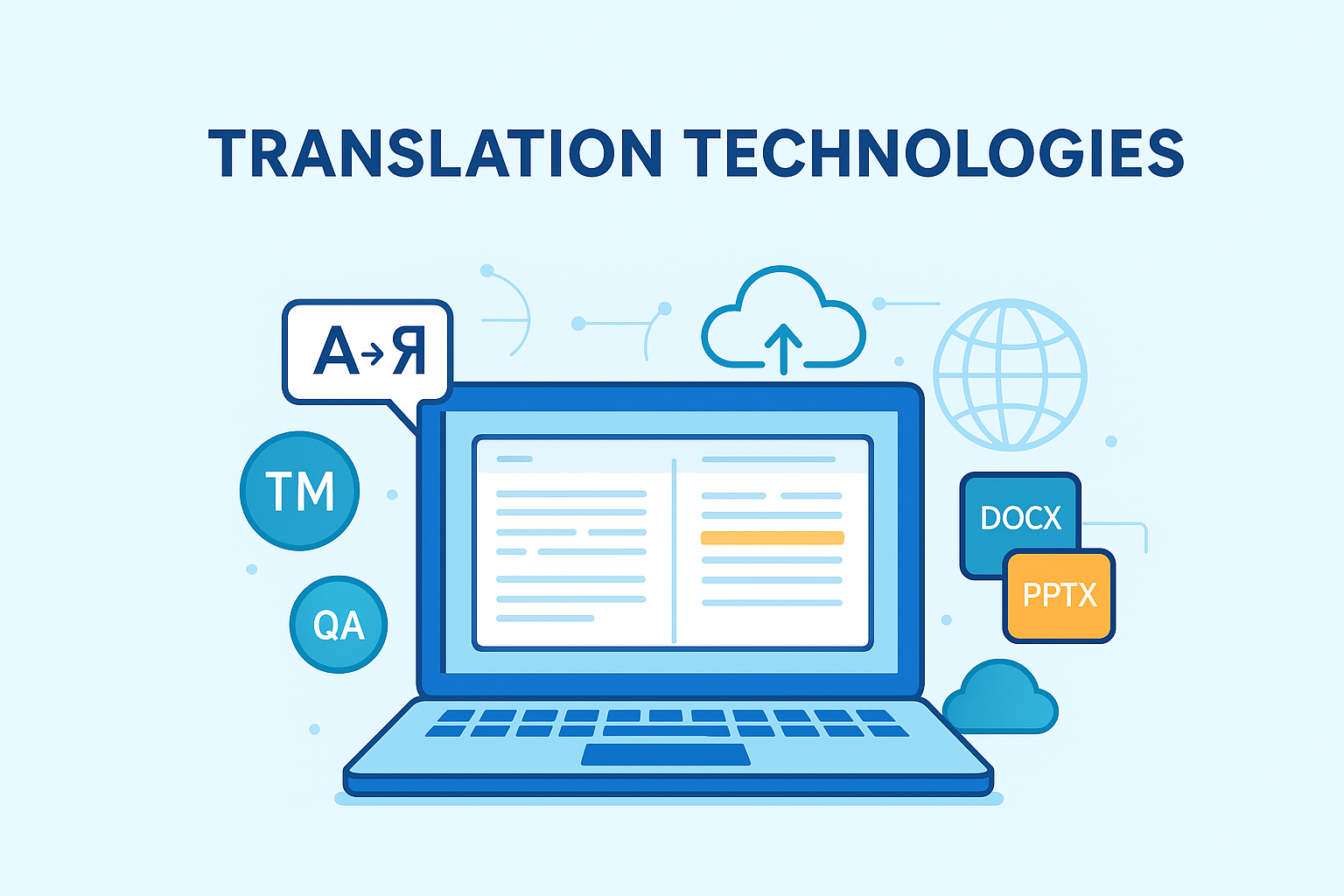
The course is designed to introduce students to Computer-Assisted Translation (CAT) tools, focusing on Trados. Students will learn to translate texts efficiently, create and manage translation memories and termbases, and handle individual translation projects using Trados. The course covers key features and best practices for optimizing translation workflows. Developed as part of the Erasmus+ Project 101128713 – DigiFLEd – ERASMUS-EDU-2023-CBHE “Modernisation of university education programmes in foreign languages by integrating information technologies/ DigiFLEd” this course will contribute to enhancing translation consistency, productivity, and quality through CAT tool proficiency.
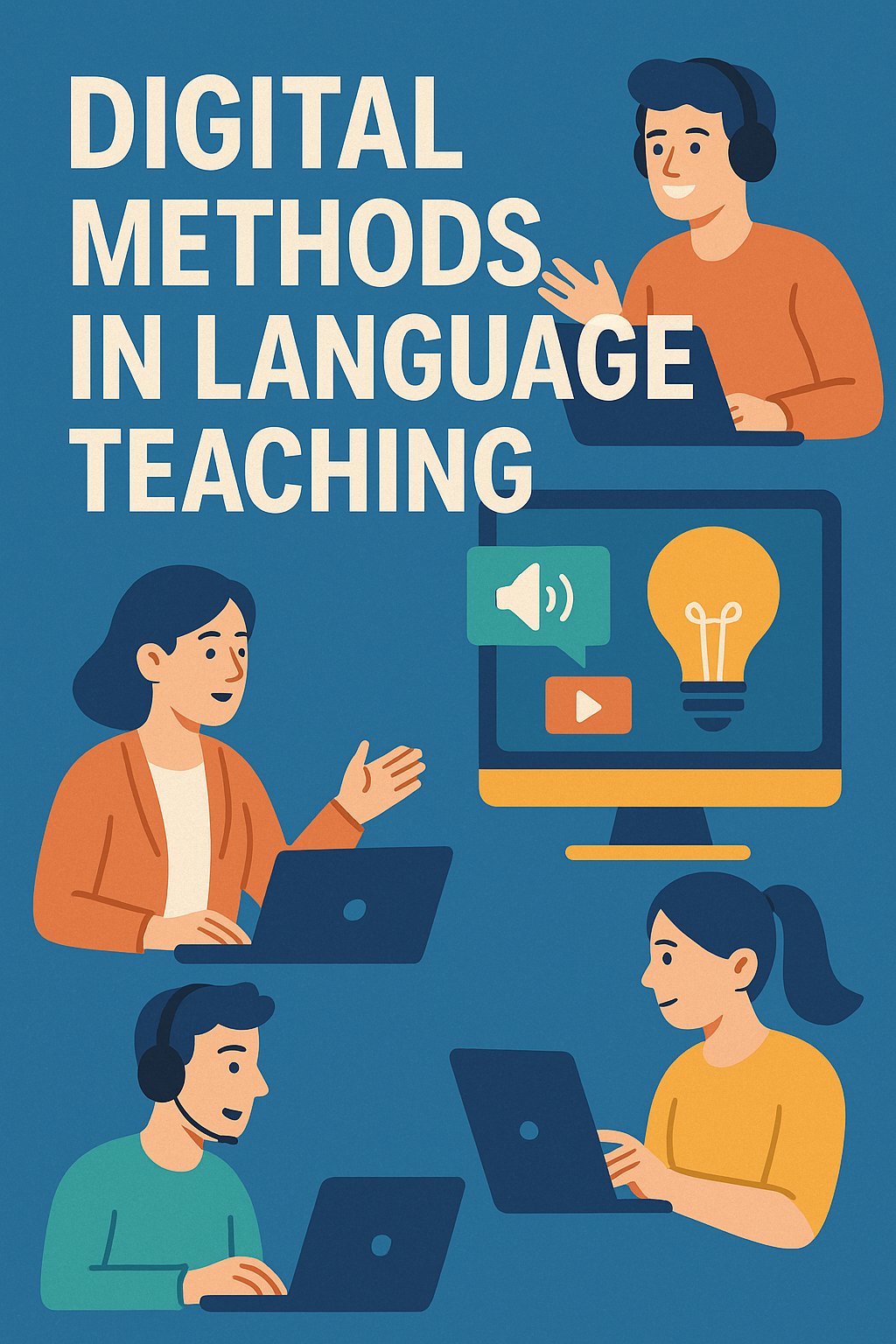
The course offers a comprehensive exploration of digital methodologies in the field of language education, focusing on the integration of technology to enhance teaching and learning practices. Participants will examine the practical application of digital tools to facilitate language acquisition, communication practice, and learner engagement. Key topics include lesson planning, the design of interactive and multimedia learning materials, strategies for fostering collaboration in virtual and hybrid environments, methods for assessing learner progress using digital platforms, catering for learners with special educational needs, maintaining research. The course also emphasizes the adaptation of traditional pedagogical approaches to suit online and blended learning contexts.

Quiz on the Article.
Read the article carefully. Then answer the following multiple-choice questions based on the content. Choose the best answer for each question.
This course is designed to help you achieve basic (A1) proficiency in Ukrainian, develop practical communication skills for everyday situations, and build awareness of Ukrainian culture.
The course was developed within the Erasmus+ project “Modernisation of University Education Programmes in Foreign Languages by Integrating Information Technologies (DigiFLEd)”, co-funded by the European Union, under the academic supervision of Maynooth University.

The course "Digital Applications in Language and Literature Studies" explores the integration of digital tools and methodologies in linguistic and literary studies. Designed to enhance students' digital literacy, analytical skills, and scholarly communication, this course covers foundational and advanced techniques for digital text analysis, interactive content creation, and critical engagement with literary texts. Students will engage with key digital tools and resources, including corpus analysis software, visualization platforms, and collaborative online environments, to examine language patterns, textual structures, and literary themes. The course also emphasizes digital resource management, academic writing improvement, and the development of effective digital communication strategies.
Co-funded by the European Union. Views and opinions expressed are however those of the author(s) only and do not necessarily reflect those of the European Union or the European Education and Culture Executive Agency (EACEA). Neither the European Union nor EACEA can be held responsible for them.
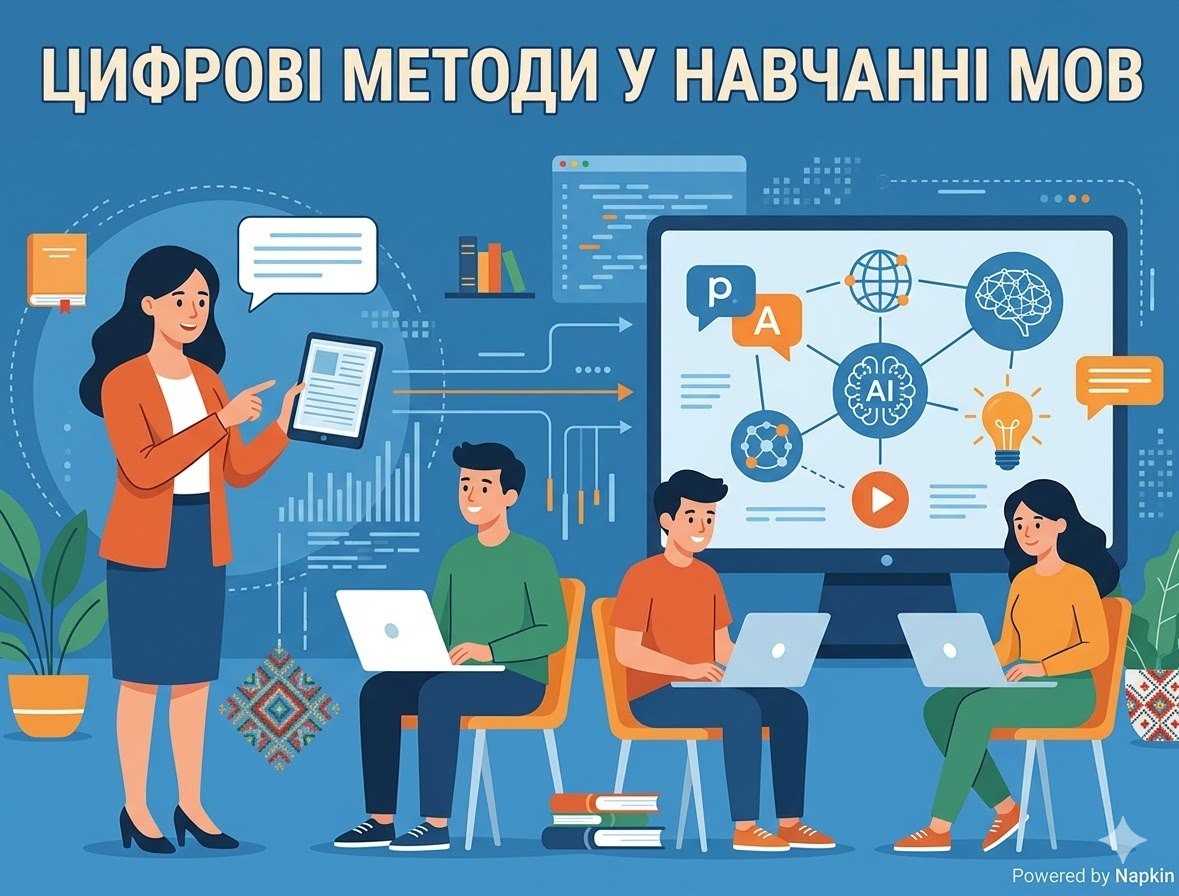
Цей практичний курс розроблений для вчителів та викладачів, які прагнуть трансформувати викладання мов за допомогою штучного інтелекту та гейміфікації. Протягом однієї лекції та трьох інтенсивних онлайн-практикумів ви опануєте сучасні цифрові інструменти (такі як Quizlet, Wordwall, SchoolAI та інші) для розвитку всіх ключових мовленнєвих умінь: від аудіювання та читання до писемного мовлення та говоріння. Ви навчитеся створювати адаптивний навчальний контент, автоматизувати процес оцінювання та професійно надавати фідбек, отримуючи готові алгоритми для впровадження інноваційних методів у ваші заняття вже сьогодні.